
Power Outages
Power outages can occur due to rolling blackouts, extreme weather conditions, or can accompany other disasters such as earthquakes. Blackouts can happen anywhere and to anyone.
-
Before a Power Outage
- Make a plan now case of a power outage. The power may be out for a few hours or a few days. If it is summer time, make a plan for how or where to go if it is extremely hot. If it is winter, make a plan for how or where to go if it is extremely cold. Remember your pets! (link opens in new tab) Think about any restrictions or closure due to COVID-19. Learn more from FEMA (link opens in new tab) and the U.S. Humane Society (link opens in new tab).
- Know if you live in an area that has rolling blackouts. A rolling blackout occurs when a power company turns off electricity to selected areas to save power. The blackouts are typically for one hour, then the power is restored and another area is turned off. Hospitals, airport control towers, police stations, and fire departments are often exempt from these rolling blackouts. They can happen at any time of day and may affect the same area more than once a day.
- Get a high-quality surge protector for your electronic equipment.
- Turn off all computers, monitors, printers, copiers, scanners, and other electronic devices when they are not being used.
- Fill plastic containers with water, leaving about an inch of space inside each one for the frozen water to expand. Place the containers in the refrigerator and freezer. This chilled or frozen water will help keep food cold for several hours if the power goes out.
- Back up computer files and operating systems. Consider buying extra batteries and a power converter if you use a laptop computer.
- If you have an electric garage door opener, find out where the manual release lever is located and learn how to operate it.
- If you have a telephone that requires electricity to work (such as a cordless phone), plan for alternate communication, including having a standard telephone handset, cell phone, radio, or pager.
- Learn how or refresh your memory on how to use your generator (link opens in new tab), and make sure your generator is powerful enough to power everything you want. Different generator sizes and features will dictate what you can and cannot power. If you want to install / hook up a generator to your house, have professionals do it for your safety, the safety of your neighborhood, and the safety of utility workers that may be working in the wider area.
- Keep your car fuel tank at least half full because gas stations rely on electricity to power the pumps.
- Remember that equipment such as automated teller machines (ATMs) may not work during a power outage, so make sure you have extra cash at home.
- If you have a business, make a plan to keep your business and your staff safe during and after a power outage. It may take several hours or several days to restore power.
-
During a Power Outage
- Turn off and unplug appliances and computers. Leave one light on to indicate when power has been restored.
- Avoid using candles. They are fire hazards.
- Do not use a gas stove for heating or operate generators indoors (including the garage). Both could cause carbon monoxide poisoning which is silent, odorless, tasteless, and deadly. Visit ESRI for Generator Safety information (link opens in new tab).
- If a traffic signal is not working, treat it as a stop sign.
- Keep the refrigerator and freezer closed to help keep the cold in longer. Learn about food safety for when your refrigerator’s power is off.
- If you use medication that requires refrigeration, most can be kept in a closed refrigerator for several hours without a problem. If unsure, check with your physician or pharmacist.
-
After a Power Outage
- Only use your generator outside. NEVER put a running generator in your garage, basement, or near windows. Learn more at the Electrical Safety Foundation International website (link opens in new tab). Learn more about carbon monoxide poisoning signs and symptoms (link opens in new tab).
- NEVER refuel a generator that is running or is still hot to the touch. Even one drop of accidentally spilled fuel can cause a fire.
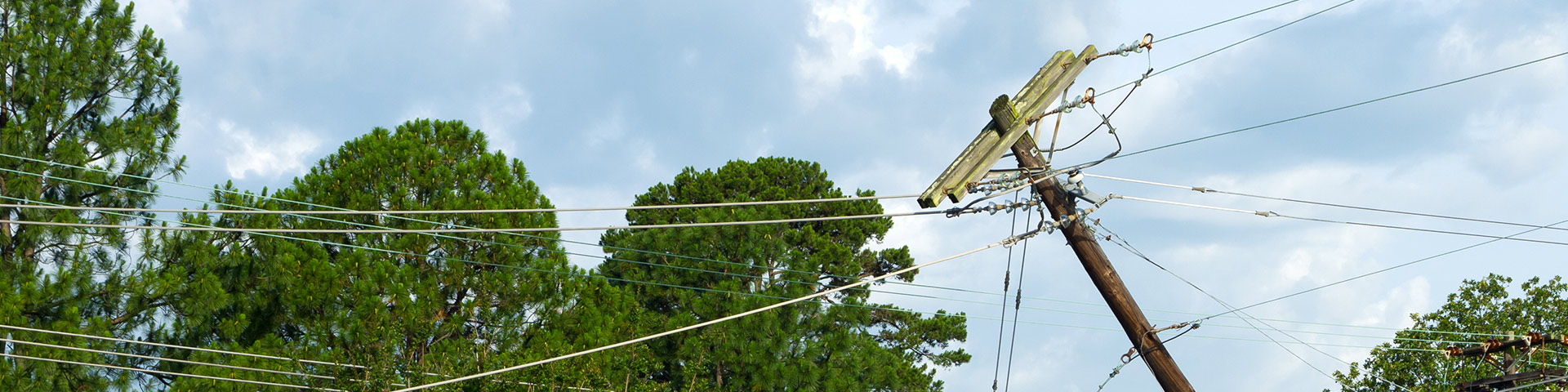
- Always assume that downed lines are electric and are live. Even if you think it is just the cable or phone line, do not go near it. Downed lines can electrocute you 35 feet away from where they are, and even farther if the ground, grass, or other vegetation is wet. If you see a downed line, go to a safe distance and call the power company to report it. Contact phone numbers are on this page. Learn more about safety around downed power lines (link opens in new tab).
- Know which electrical equipment may have been damaged by water or power surges, and what needs to be replaced by a professional. Visit Electrical Safety Foundation International to learn more (link opens in new tab).
- Check your refrigerator and freezer. Throw away any food that has been exposed to temperatures 40 degrees or higher for two hours or more, or that has an unusual odor, color, or texture. Visit Food Safety and Inspection Service to learn more (link opens in new tab).
- If the power is out for more than a day, discard any medication that should be refrigerated, unless the drug’s label says otherwise. If a life depends on the refrigerated drugs, consult a doctor or pharmacist and use medicine only until a new supply is available.
- Avoid flooded areas. There may be live wires or other electrical equipment that is touching or under the water that can electrocute you.
- After the storm has passed, there are still dangers. Be careful of where you fish, wade in the water, swim, boat, or otherwise enjoy the water. Electric Shock Drowning is a real possibility if there are loose, exposed, or downed lines. Boat docks, marinas, pools, and spas can be especially hazardous. Learn more from the Electrical Safety Foundation International (link opens in new tab) and the National Fire Protection Association (link opens in new tab).
-
Downed Power Lines

Downed Power Lines: Safety Information
- Always assume a downed power line is live and dangerous.
- Downed power lines can energize the ground up to 35 feet away.
- Never drive over downed power lines or through water that may be in contact with them.
- Never attempt to move a downed power line, even with objects that are typically not conductive.
- If you see a downed power line, immediately notify local authorities and keep others away.
Visit ESFI for more information. https://www.esfi.org/disaster-safety (link opens in new tab)
-
Portable Generator Safety

Five Tips for Using Portable Generators Safely
- Ensure the generator is at least 30 feet away from the home and any openings.
- Only operate generators in dry areas, away from rain or floodwaters.
- Store gasoline and fuel containers away from heat sources and flames.
- Never plug a generator directly into household outlets, as this can cause electrocution to occupants or utility workers.
- e aware of carbon monoxide poisoning symptoms, including dizziness, unconsciousness, nausea, and vomiting.
Generator Safety Tips from AccuWeather

Generator Safety: Key Guidelines
- Use generators outdoors only, in well-ventilated areas away from doors, windows, and vents.
- Never operate a generator in an attached garage, even if the door is open.
- Position generators so exhaust fumes cannot enter buildings.
- Install carbon monoxide alarms and follow manufacturer placement instructions.
- Allow generators to cool before refueling and never refuel while hot.
- Store fuel in approved containers, clearly labeled, and kept outside living areas.
- Never connect a generator directly to household wiring without a properly installed transfer switch.
- Inspect cords and plugs before use and ensure grounding is appropriate.
Carbon Monoxide Risk
Carbon monoxide poisoning deaths have increased in recent years as generator use has risen. Proper placement and ventilation are critical to prevent exposure.